

BURNLEY TODAY
CLICK HERE to read about Burnley yesterday.
A town amidst the Pennines, nestling in a basin between the River Calder and the River Brun, surrounded by hills and moorland.
A variety of attractions are available from stately homes to industrial archaeology, from a bird conservation centre to a children’s fun house, each vying with the other to provide visitors with something to suit all tastes and ages. More than 1,000 acres of landscape parkland provide both residents and visitors with a green oasis in which to walk or eat lunch, why not walk the Burnley Way.
The five major parks include Towneley Park - one of the few grade 2 Listed parks in Lancashire, Thompson Park with its fine boating lake, Queen’s Park which has a modern conservatory, Scott Park with its Victorian bandstand and Bank Hall Park which was formerly a coal mine, but has now been landscaped and planted with trees, so that all that remains of its former use is a monument to the miners who worked there. The 2002 Local Plan outlines the authorities ambitions for Burnley areas future.
For a relaxing shopping experience come and see what Burnley town centre has to offer. The pedestrianised shopping centre allows you to browse safe in the knowledge that you are in one of the most secure town centres in the country with security cameras covering all the major shopping areas and the car parks. The glass covered walkways and atriums contain some of the best names in high street shopping combined with traditional Victorian streets crammed with fascinating specialist shops from music stores to herbalists, galleries to antique shops means that a day out shopping in Burnley has something for all tastes and all ages.
If you love shopping and are always looking for a bargain then Burnley is the place to be; the traditional market has been around for over 700 years, since Burnley was granted a market charter in 1294. There are over 260 stalls offering every type of bargain under the sun: food, clothes, shoes, lighting, aromatherapy oils, flowers - in fact the choice is endless. The Markets and the mill shops offer some of the best prices and shopping experiences in the North West and you will be served by some of the friendliest people - after all you are in the North of England, an area known for the warmth of its hospitality.
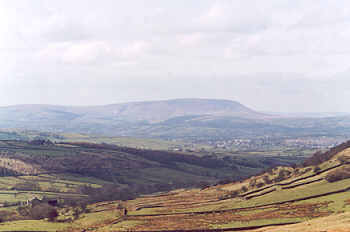
Dominating the landscape for miles around is magnificent Pendle Hill, all 1831 feet of it. Not quite mountain, yet big enough to inspire all who see it, including George Fox, whose vision from the top of Pendle of a new way of life led to his founding of the Quaker movement. This "Brooding" hill of Robert Neill’s classic Mist Over Pendle is home to an abundance of wildlife, from grouse and curlew to hare and fox, and it provides endlessly fascinating walks over its springy turf and tussocks of moorland grass. For the more energetic it is the ideal place for hand-gliding where the thermals can pick you up and whisk you away like a bird in flight, or for dry-skiing on the purpose built slope. However it is the mysterious magical tales of the Pendle Witches that attract today’s visitors. 1612 saw the birth of the legend of the Pendle Witches. In a time of superstition and paranoia, accusations of witchcraft were levied against several families in the villages around Pendle Hill. Those women were accused, confessed, tried, found guilty and executed by being hanged on the gallows at Lancaster. Their names are famous to this day Old Chattox, Alice Device, Alice Nutter and Old Mother Demdike. They were no more witches than you or I but the stories surrounding them give a fascinating insight into the climate of the times.
The South Pennines is no longer just the bit in the middle’ which straddles the Lancashire - Yorkshire border this area has recently been designated an official Heritage Area. This sweeping landscape of vast open moorland and hills was one of the birthplaces of the industrial revolution. The moors provided a great escape for the workers who took to the hills to get some exercise and longed for fresh air. Today a network of well established footpaths give access to the countryside which has long proved to be the inspiration for the Bronte sisters and poet laureate Ted Hughes and his wife Sylvia Plath. Keep your eyes open on your travels around the South Pennines and you will he rewarded by the sight of some very special birds including merlins, peregrines and the rare ringed ouzel. In fact the moorlands of the South Pennines are of vital importance for the survival of upland birds and it has been recognised as a SPECIAL PROTECTION AREA marking it as one of the most important sites in Europe for bird conservation.
All of this set in some of the most attractive countryside in Lancashire: wild moorland and romantic ruins contrast with valleys where early industries were fuelled by the rushing streams. Burnley Can Be Reached by road via the M6 and M65 from the Preston area and the coastal resorts, the M66 from Manchester International Airport. By Rail via the Central Railway Station to Preston, where trains to all major destinations in the country can be caught, or via Manchester Road station to Leeds and the Eastern Region trains. By Canal for those with time on their hands, Burnley can be reached via leisurely a journey on the Leeds & Liverpool Canal through some of the most beautiful countryside in Britain.
CLICK HERE to read about Burnley yesterday.
)